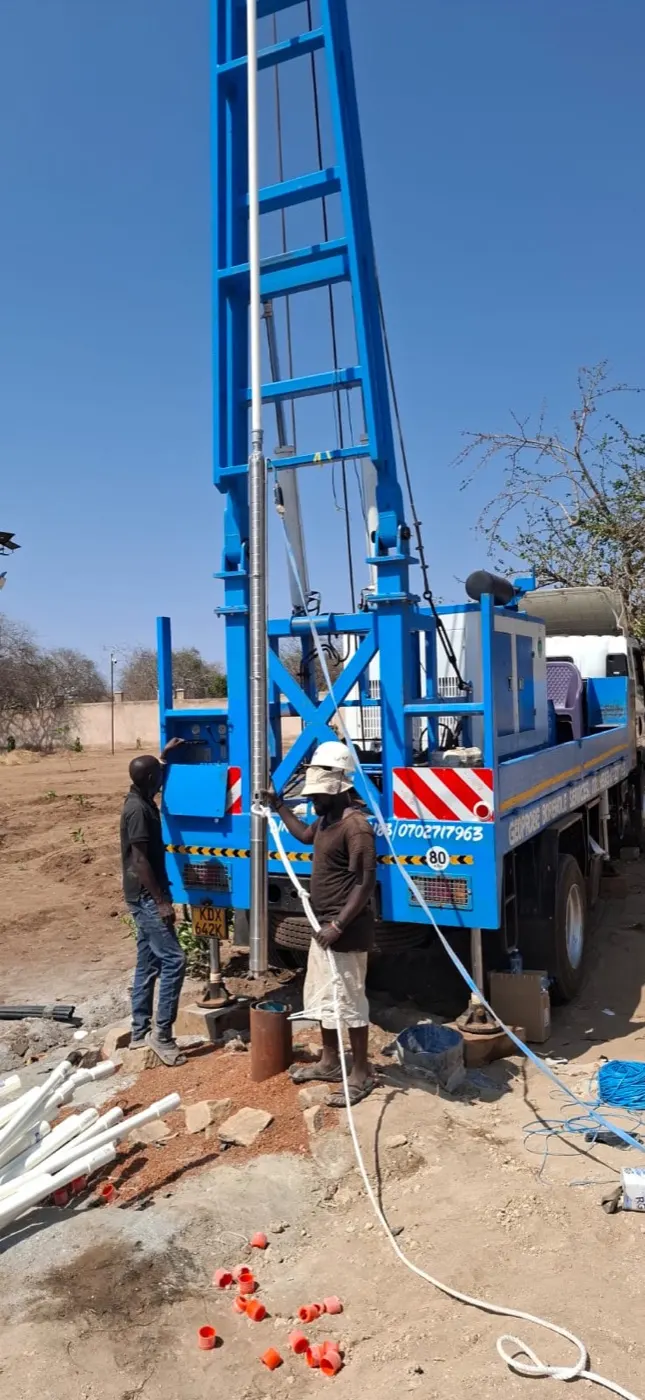
Our truck-mounted rigs drill to the depth the survey indicates, then line the hole with casing and screens.
We drill with our own truck-mounted rigs and crew, from rig set-up through to water strike.
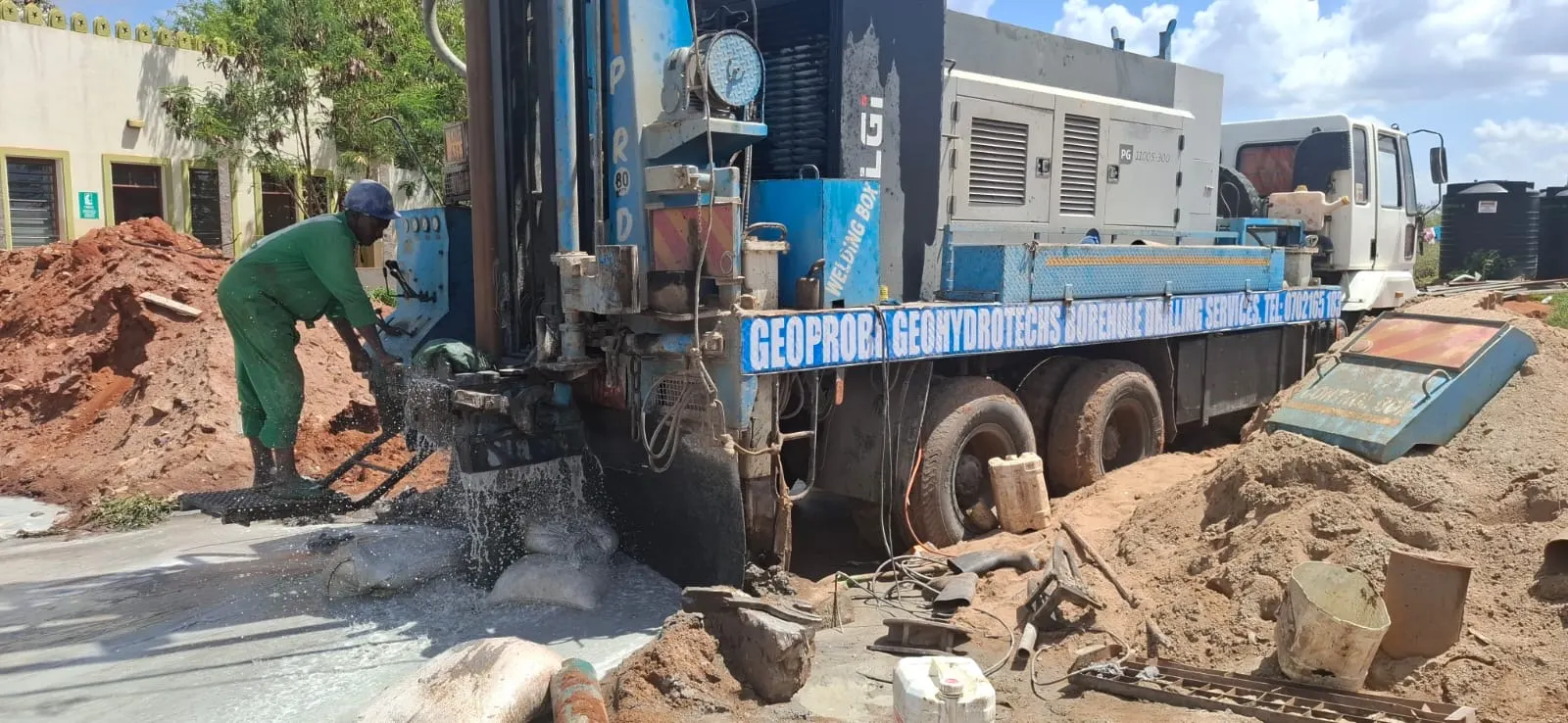
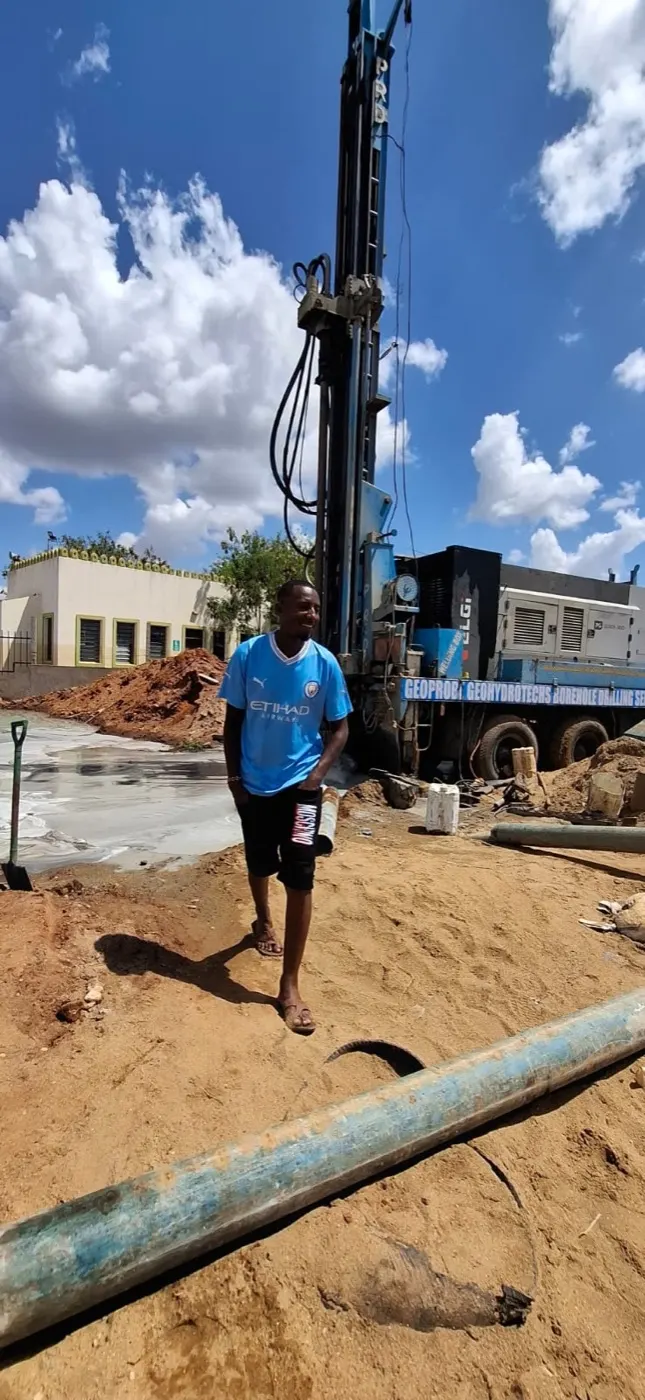
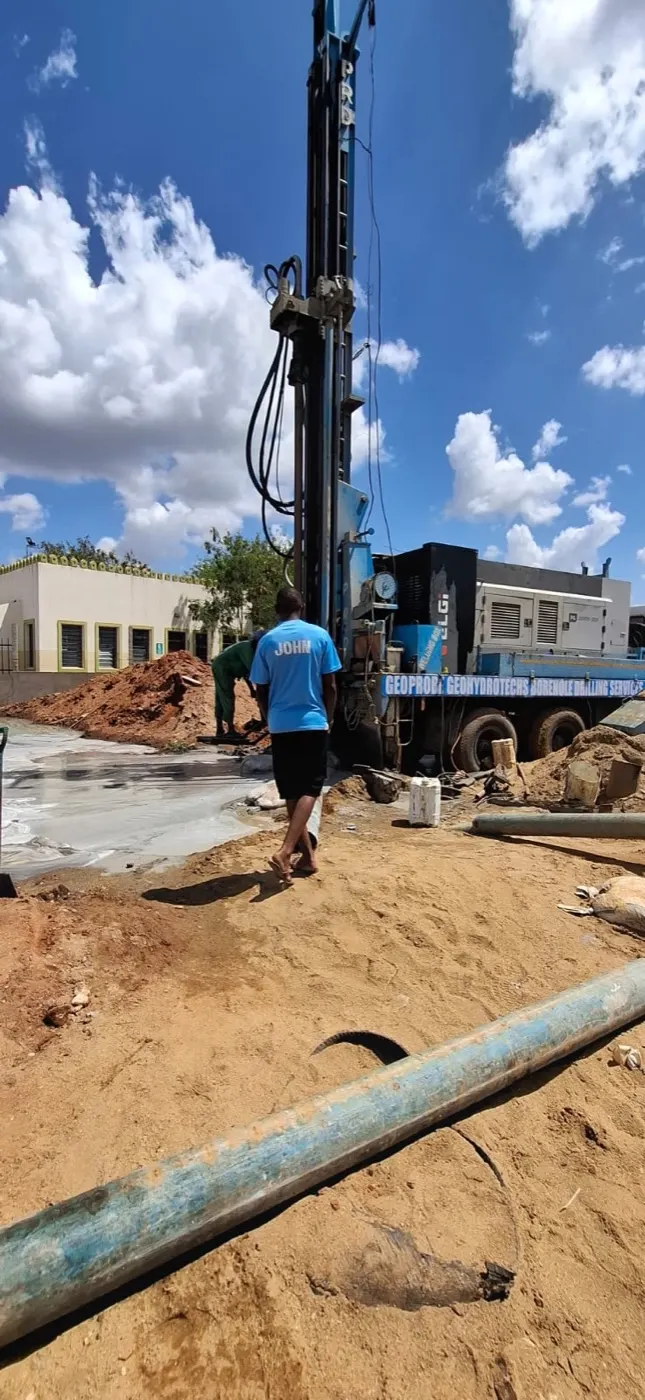
The crew manages flushing water and returns throughout, cases and screens the borehole, and clears the site before handing it back. We have drilled on open land and on busy compounds between existing buildings.
Rig set-up
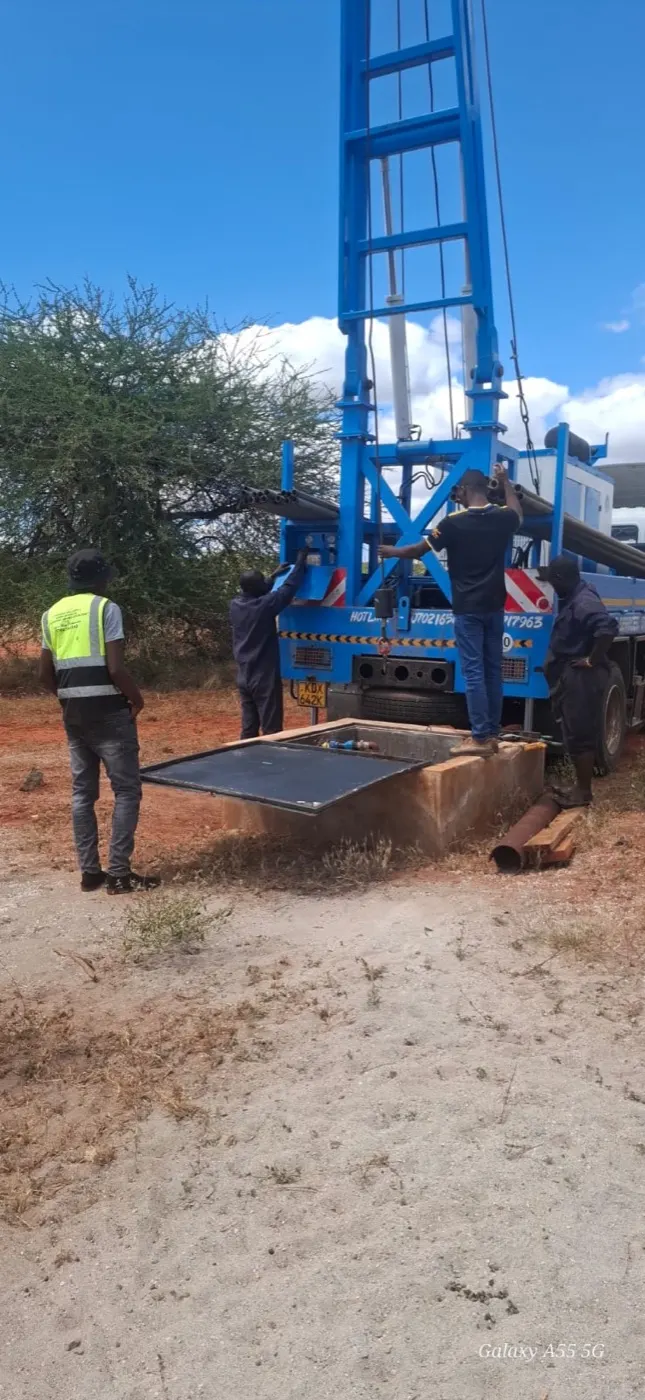
The rig is positioned on the survey point, working around buildings where needed.
Drilling
We drill through to the water-bearing formation, managing flushing and returns.
Casing and screens
The hole is lined so the borehole stays open and water flows in clean.
Eight stages, one team.
A borehole is more than drilling. Each one we deliver moves through the same stages, from reading the ground to an installed pump, with our own team on site throughout.
 01
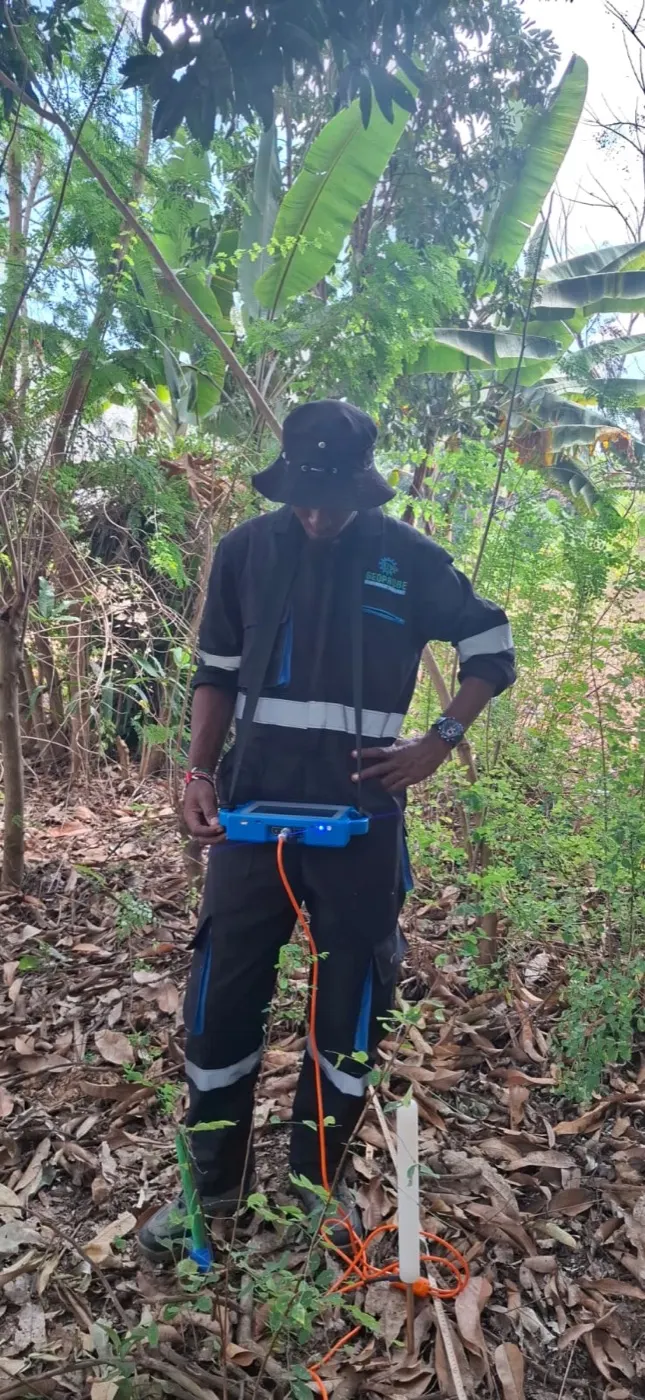
We take geophysical readings and study the geology of the site to find the most promising point to drill.
Survey details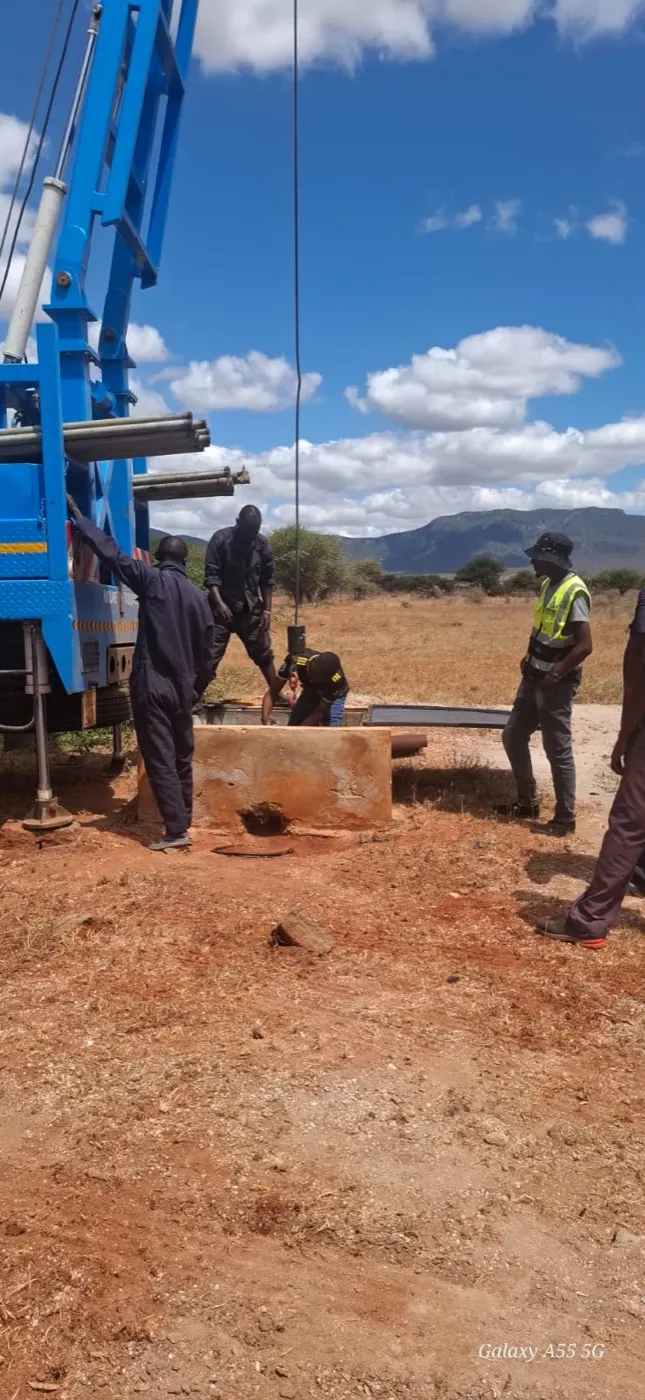 02
Before drilling, we take the site through an environmental impact assessment. It looks at the effects on groundwater, nearby wells, rivers and wetlands, and sets out how noise, dust and drilling waste will be managed.
03Our truck-mounted rigs drill to the planned depth, using the drilling method that suits the ground.
 04
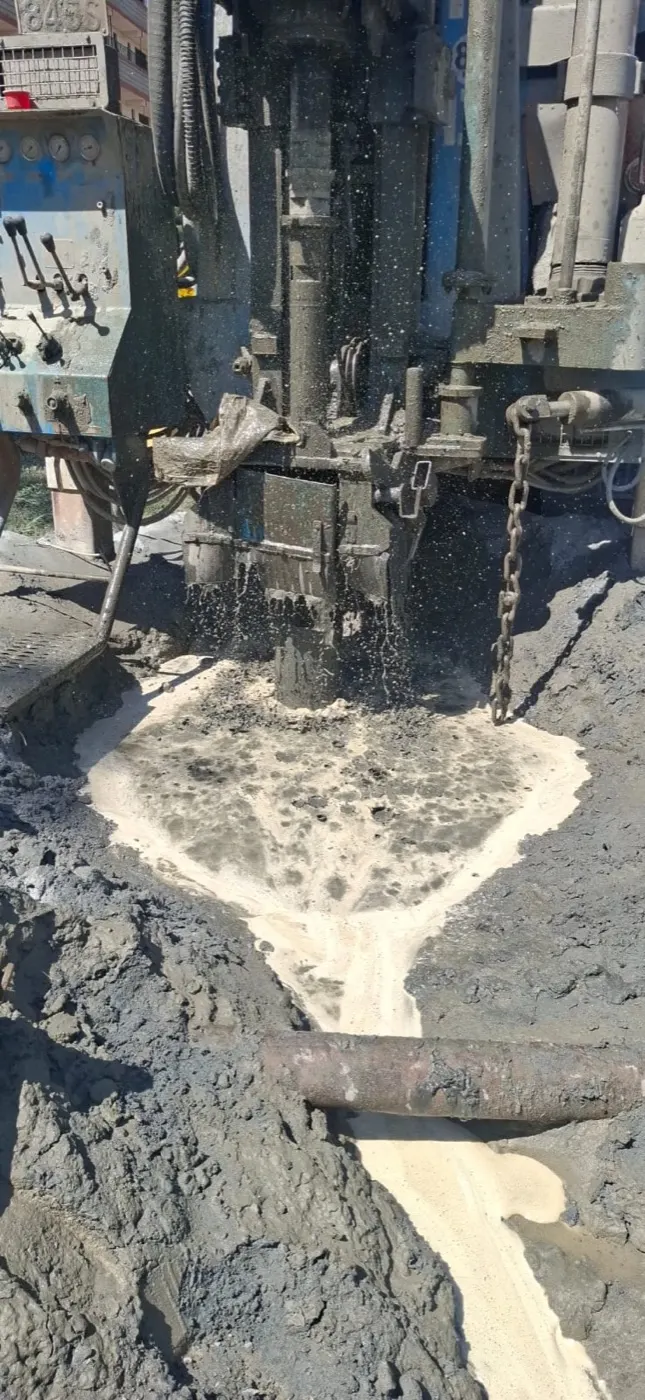
As we drill, we record the rock layers, fractures, water strikes and drilling rate. The log decides where the screens go.
 05
We line the borehole with casing and screens, pack gravel around the screens and seal the top against surface water.
 06
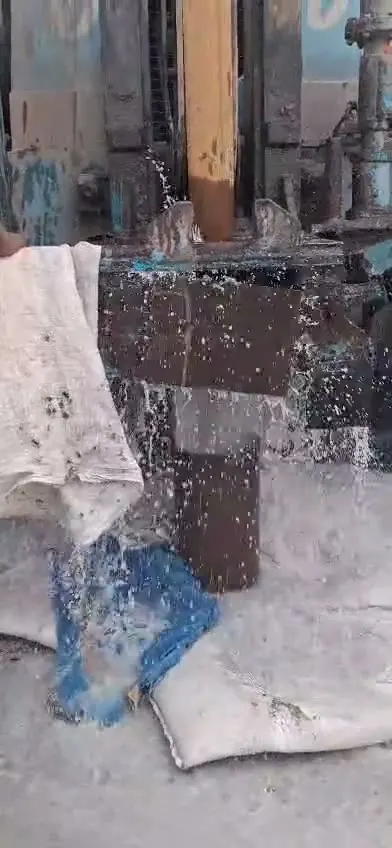
We flush the borehole until the water runs clear of drilling mud and fine sand.
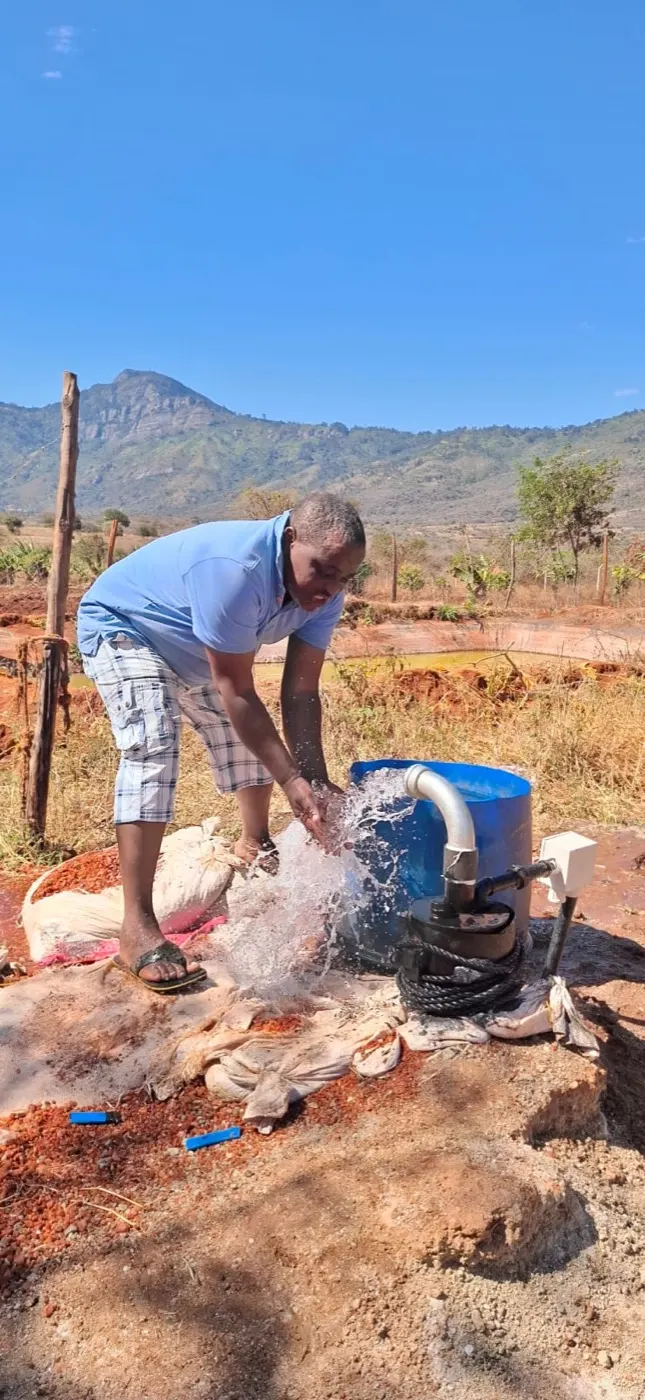 07
We pump the borehole over a set period and record the yield and how far the water level draws down.
Pump testing details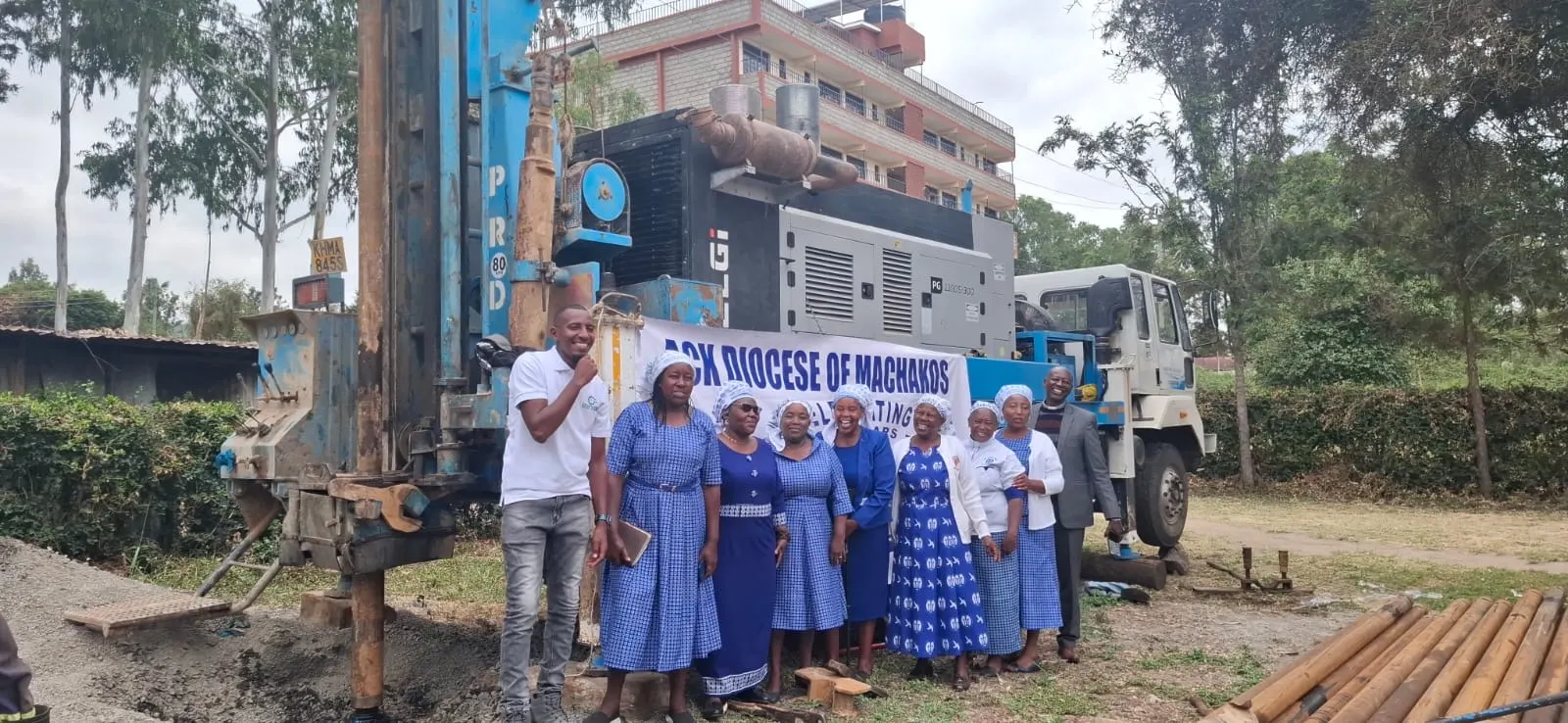 08
We size the pump from the test results, install it and hand the borehole over, ready to use.
See a handover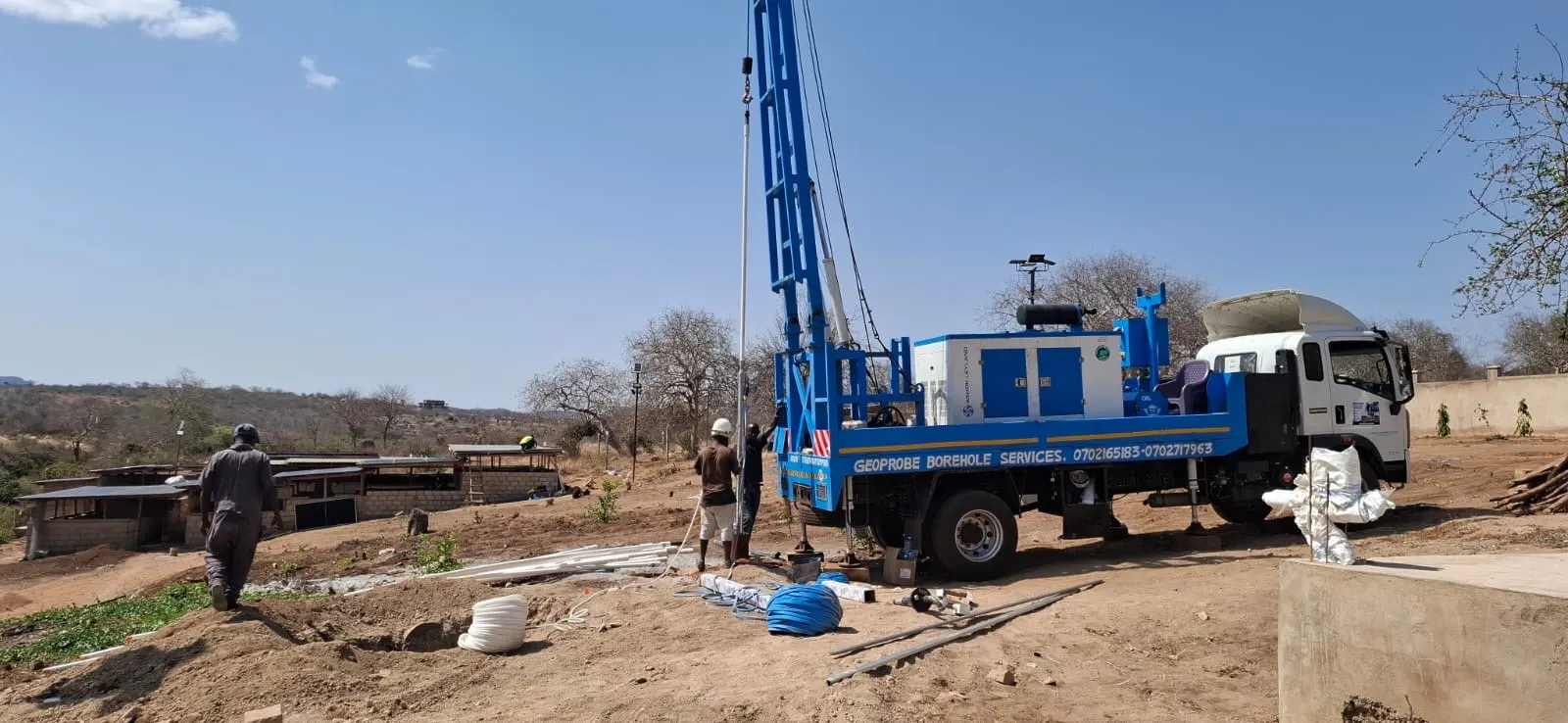
A survey is the first step. Share the location and what you need, and we will call you within one working day to arrange it. We quote after the survey.
